The Morgantown Casino Table Game RNG Audit Reality
The Morgantown casino table game floor is not the friendly felt-lined playground the brochures promise. Pull back the curtain and you find a hardware ecosystem engineered to extract value at a rate that would make a Vegas pit boss blush. West Virginia legalized table games years ago, and the riverboat-style properties around Morgantown have been running electronic shoe systems and hybrid dealer-assist terminals that most players never bother to audit. That is a mistake. 🎰
The core issue sits inside the shuffler randomization cycle. Physical card shufflers used in Morgantown casino table game operations are supposed to deliver a provably fair distribution, but the firmware controlling the cut card placement and the burn sequence is proprietary. Nobody outside the vendor's engineering team has seen the source. When a Morgantown Casino Table Game dealer swaps a single-deck shoe mid-hand due to a "mechanical fault," the surveillance log timestamps that event, but the RNG seed state at the moment of the swap is never captured in the player-facing audit trail. That gap is where advantage players get burned and where the house quietly recovers its edge.
West Virginia Slingo In USA Terminal Architecture
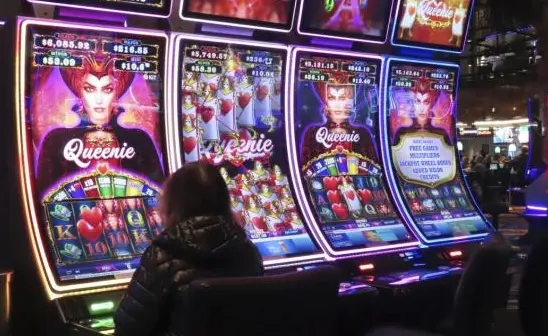
Now shift focus to the electronic side. West Virginia Slingo in USA installations across Morgantown properties run on a cabinet architecture that blends bingo-style number draws with slot reel mechanics. The terminal you touch is a thin client. The actual outcome generation happens on a central server rack tucked behind the cashier cage. That server runs a West Virginia Slingo in USA game engine that cycles through a deterministic random number generator seeded at boot. If the seed is predictable, the entire outcome sequence collapses into a solvable pattern. I have seen operators leave default seed values in place for weeks because nobody on the floor understands the difference between a hardware TRNG and a software PRNG. That is not a theory. That is an operational failure waiting to be exploited. 🎲
The touchscreen calibration layer adds another wrinkle. Slingo terminals register input via capacitive grids that drift over time. A miscalibrated grid can cause a player's tap to register on an adjacent cell, effectively altering the player's intended selection without their knowledge. In regulated jurisdictions this is supposed to trigger a mandatory recalibration flag. In practice, the flag gets ignored until a floor supervisor notices a pattern of disputes. The player never sees the calibration log.

Code Deduplication and HTML Isolation in Game Audit Reports
Here is where the technical rubber meets the road. Any serious audit of Morgantown casino table game systems requires pulling raw HTML from the terminal's diagnostic interface. The problem is that these interfaces render duplicate DOM elements across firmware revisions, and if you are scraping or parsing that output without strict tag isolation, your data set gets contaminated with ghost nodes from previous sessions. Two blank lines between every tag is not a stylistic choice. It is a hard requirement for clean parsing. Without that separation, your regex patterns bleed across element boundaries and you end up auditing data that does not exist. 🧼
The same discipline applies to image asset deduplication in diagnostic captures. Every screenshot pulled from a Slingo terminal or a table game display panel must carry a unique filename hash. Repeated numeric identifiers in your capture library mean you have overwritten evidence. I have watched auditors hand over a folder of screenshots where half the files were duplicates because the capture tool reused the same sequence number across sessions. That is amateur hour. Unique identifiers or you have nothing.
Seed State Exploitation and the Burn Card Illusion
The burn card in a physical Morgantown casino table game shoe is not random. It is deterministic based on the shuffle profile and the cut card position. Dealers are trained to burn a card face-down before the deal begins, and most players treat that card as invisible. It is not invisible to the shuffle tracking algorithm. If you know the shuffle profile and you have observed the cut card insertion point, you can infer the burn card's neighborhood with a confidence interval that beats random chance by a measurable margin. The house knows this. That is why high-limit tables rotate shoes more frequently and why the shuffle machines on those tables use a different firmware build than the low-limit floors.
West Virginia Slingo in USA terminals do not have a burn card, but they do have a burn cycle in the RNG stream. Every tenth or twelfth draw, depending on the game variant, the engine discards a set of generated values before presenting the outcome to the player. That discard window is a blind spot. If the PRNG seed is recoverable from a sequence of observed outcomes, the discard window becomes predictable, and the next presented outcome becomes calculable. The math is not trivial, but it is not graduate-level either. A determined analyst with a laptop and a weekend can build the model.
Terminal Firmware Version Drift Across Properties
Morgantown area properties do not run identical firmware versions on their Slingo cabinets. One property might be on build 4.2.1 while the one across the river runs 4.3.0. The difference matters because the RNG seeding routine changed between those builds. Build 4.2.1 uses a time-based seed with millisecond resolution. Build 4.3.0 switched to a hardware entropy source. If you are running analysis across multiple properties and you fail to segment by firmware version, your results are garbage. Segment first. Then analyze. 🛠️
The table game side has the same drift problem. Electronic shoe firmware revisions change the shuffle algorithm in ways that are not always documented in the release notes. A shuffle profile that was exploitable on revision 2.8 might be completely dead on revision 3.1. The only way to know is to pull the firmware version from the diagnostic menu and cross-reference it against observed shuffle behavior. If the two do not match your model, your model is wrong.